
How To Make Risotto
A repeatable and customizable core method for your repertoire

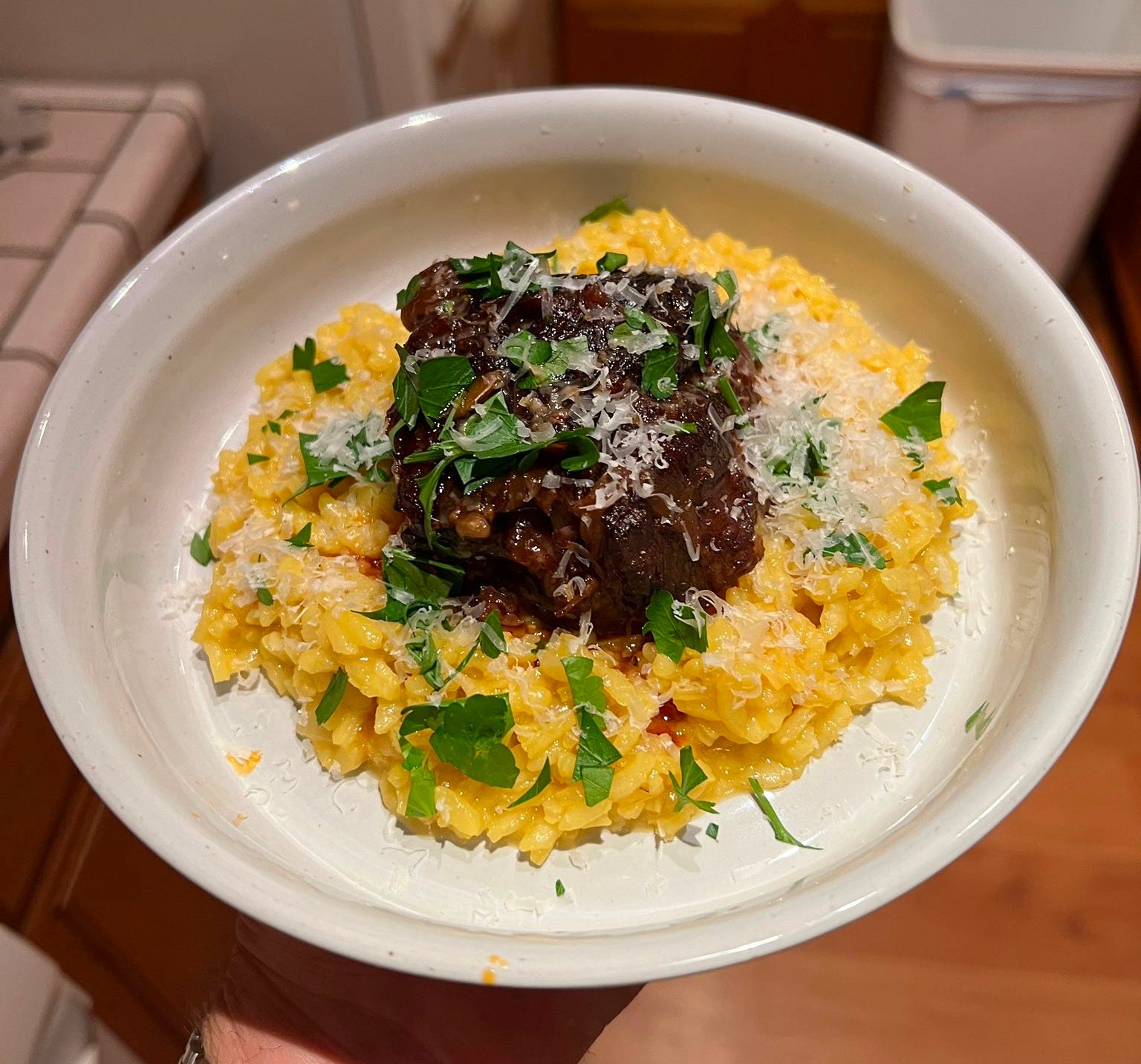
Today I’m sharing the method I like to use to make risotto. I call this a method, rather than a recipe, because there is a ton of room for customization and different flavor profiles once you’ve mastered the core techniques. In this post I’ll cover everything you need to know about the fundamentals of risotto so that you can get comfortable with the method and then start to get creative.
This is one of the methods I included in 80/20 Cooking, a guide to the fundamentals of cooking that I released earlier this year. There are 12 lessons covering foundational skills like seasoning, heat, and knife skills, plus 18 recipes that are designed to help you put those skills into practice (like this one). If you want to check out 80/20 Cooking, you can learn more at the website, or purchase with this link (and subscribers here can use the code SUBSTACK for 20% off).
Let me know if you make this!
Myles
Notes
I absolutely love risotto, and I think it’s a really great thing to have in your repertoire. It’s hearty, healthy, very customizable, scales up easily, and makes great leftovers.
There are a few key considerations here:
When making risotto, you do not want to rinse the rice as you would when making traditional white rice. Here the starch on the rice helps to contribute to the creamy, starchy texture that defines a great risotto, so you don’t want to wash that off.
Always use Arborio or Carnaroli rice for this dish. These are specific Italian varietals of rice with a high starch content that are specific to risotto. If you use another varietal, you won’t get the right texture.
I start this recipe by sautéing shallots, which have a nice mild flavor and cook fast. But any type of onion works.
Some risotto recipes call for adding a half cup or so of dry white wine before adding the broth. This isn’t strictly necessary, but it does make for a slightly more balanced dish. I do this whenever I have white wine on hand, but it works fine without it. If you do add the wine, pour it in after you’ve toasted the rice and simmer it until it’s fully absorbed, then start adding your broth.
The key to good risotto is to slowly add in hot broth, and to keep the dish moving fairly constantly. Make sure you have a separate pot with your broth that’s heated. If you add in cold broth, it will delay the cooking process and the texture won’t be right.
You can make this dish with any kind of broth, but a high-quality bone broth will make a big difference in terms of texture and flavor.
You should add salt in stages and taste throughout the cooking process in order to land on a final level that works. Remember that certain broths (and the cheeses you’ll add) have salt as well, so you’ll need to taste and adjust.
If you run out of broth before the rice is fully cooked, you can finish it with water. Just make sure that’s hot too. The exact quantity of liquid that you add can vary slightly.
If I’m adding other ingredients to the risotto (mushrooms, broccoli, etc) I usually add those fully cooked towards the end of the cooking process.
In this particular recipe I’ve included saffron (to model this dish after the classic Italian risotto Milanese), but you don’t have to include it.
Ingredients
1.5 cups arborio rice
2-3 cups chicken bone broth
1/2 cup dry white wine (optional)
1 large shallot, finely diced
1/2 tsp saffron threads
Parmesan or Pecorino romano
butter
olive oil
salt
black peppercorn
Process
Heat up a saucepot, small stock pot, or saucier (my preferred piece of cookware) over medium-low heat.
Place a separate pot with your broth over medium heat and allow it to get hot.
Into your risotto pot, add a tbsp or so each of butter and olive oil. Once the butter has melted, add in your diced shallots and cook, stirring occasionally, until translucent.


Add in your rice. Stir it around the pot, allowing the oil to coat the rice.
Cook the rice until the grains are coated and the edges are turning translucent (2-3 min).
If you’re adding white wine, add in 1/2 cup at this point and stir to incorporate.


Meanwhile, use the back of a spoon to crush the saffron threads into a powder. It doesn’t need to be super fine, but this helps with distribution. Add the saffron threads to the rice mixture and stir to combine.
Certain recipes call for “blooming” the saffron in hot broth before adding, but I find that you can just add it directly early in the cooking process and it will bloom throughout the cook time.


Pour in 1/2 cup of the hot broth and begin stirring immediately.
Stir the broth until it’s well-absorbed, maintaining a gentle simmer the whole time. At this point you can add in some salt.
This is essentially the process of cooking risotto— add in hot broth, stir and simmer until absorbed, taste and adjust with salt, and then repeat until the rice is fully cooked!


Continue to add in hot broth, stir, and simmer. Make sure that you taste throughout the cooking process and add more salt as needed.
You want the risotto to maintain a gentle simmer the whole time, so adjust your heat as necessary. Usually this process takes around 20-30 minutes, but this can vary quite a bit, so taste it and use your senses to tell you when the rice is done. It should be ever so slightly al dente (like pasta) and should have a bit of a bite to it but be fully cooked.
When the rice is close to being fully cooked, add in a generous grating of Parmesan and/or Pecorino, a tbsp or two of butter, and a few cracks of black pepper. Stir to combine.


When it’s complete, the risotto should have a creamy, velvety texture that’s thick and spreadable without being too liquidy. Serve it immediately.
I particularly love serving this with red wine braised short ribs.
This also makes for amazing leftovers. The rice will continue to thicken as it rests, and it can be used the next day to make arancini.


The long defunct Brooks Brothers “Of Rogues and Gentlemen” recommended mushroom risotto as a “go-to” dish for bachelors — and I couldn’t agree more, for anyone!